
Lebanese Christian Women
From the Glories of Phoenicia to the Heroism of the Modern Age
“The measure of a nation’s civic and spiritual progress lies in the place that Woman holds in its history.”
Throughout the history of Lebanon, woman appears across the ages as Phoenician, Christian, Lebanese, and Maronite: guardian of the faith, companion of man in steadfastness, and a living image of the nation’s soul.
Our history is rich with great women who inspired the world and helped shape its destiny. No single article, nor even a whole book, could ever do full justice to their heroism. Yet these pages present some of our saints, heroines, and legends who shaped the glory of our Lebanese Christian history.
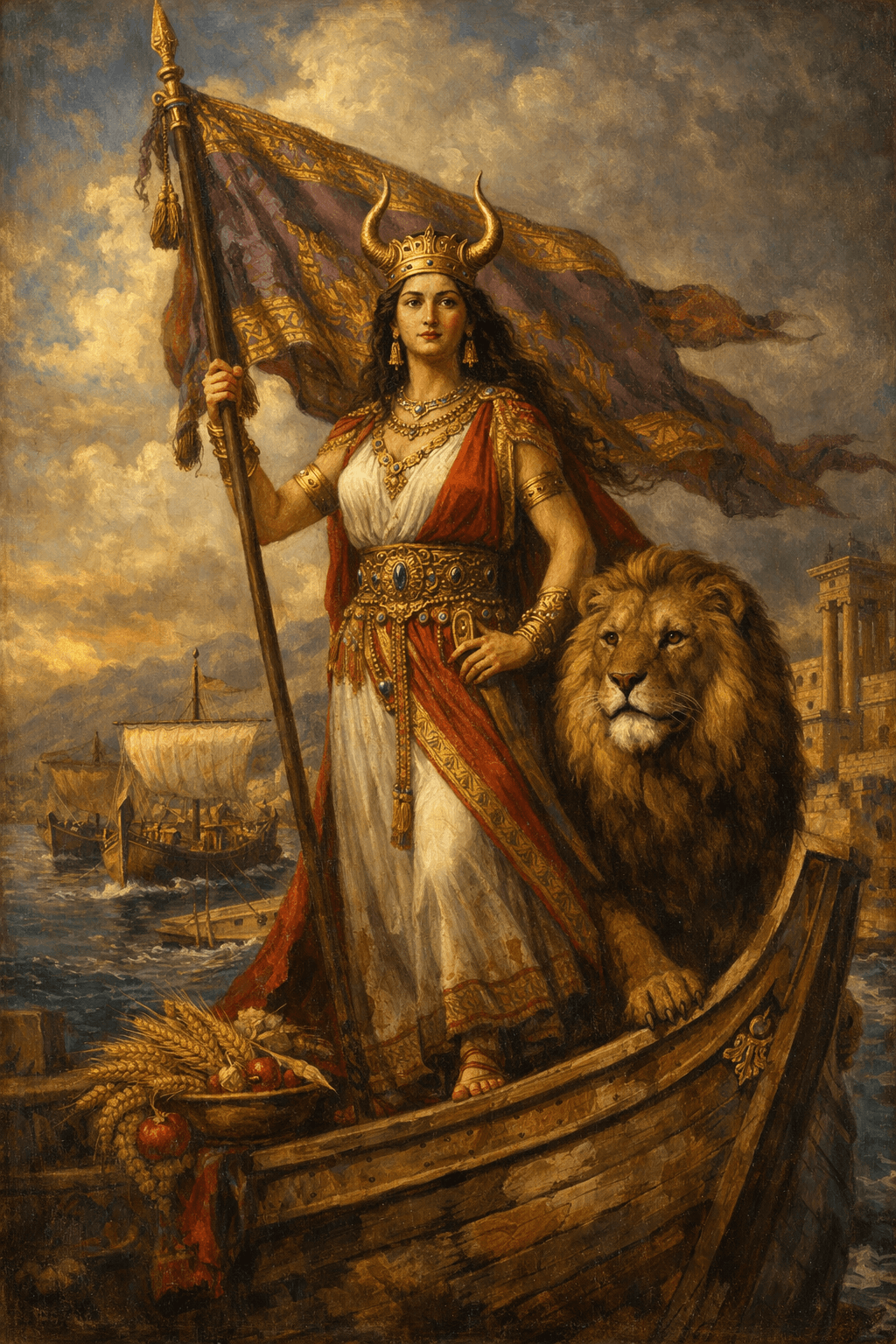
1) Astarte
Astarte, daughter of Uranus and Gaia in the ancient Phoenician lineage, and wife of El, king of Byblos, was linked not merely to myth but to actual sovereignty. Ancient accounts describe her as “the very great queen”: a ruler who governed alongside Hadad and Damaron, and who crowned her head with bull’s horns as a sign of kingship and strength. She appears on the coins and images of Tyre, Sidon, and Byblos standing on the prow of a ship, holding a banner, crowned with a mural crown, and in some depictions riding a lion—an icon of a woman leading both maritime and military expansion.
Yet Astarte was not preserved in memory only as a ruler. She was also associated with great motherhood and fertility: her statues show her nursing, holding ears of wheat, or joined to the fertility of earth and beast. From Byblos her worship spread to Paphos in Cyprus, Eryx in Sicily, and Aphaca on the river Adonis, where pilgrim processions would ascend from Beirut, Byblos, and the Beqaa. Her name then passed through civilizations: Ishtar in Babylon, Aphrodite in Greece, Venus in Rome, while her image endured in art, engraving, and poetry over many centuries.
Her value today is that she establishes a clear image of the Lebanese Christian woman: authority, meaning, and mission. Just as Astarte remained in memory as a symbol of strength, fertility, and leadership, that same symbolic memory passed in the Christian age into the veneration of Mary as the protecting mother and Queen of Heaven. This symbolic continuity helps explain why the Maronite woman later emerged as a moral and national force, not a secondary figure in the history of the community.
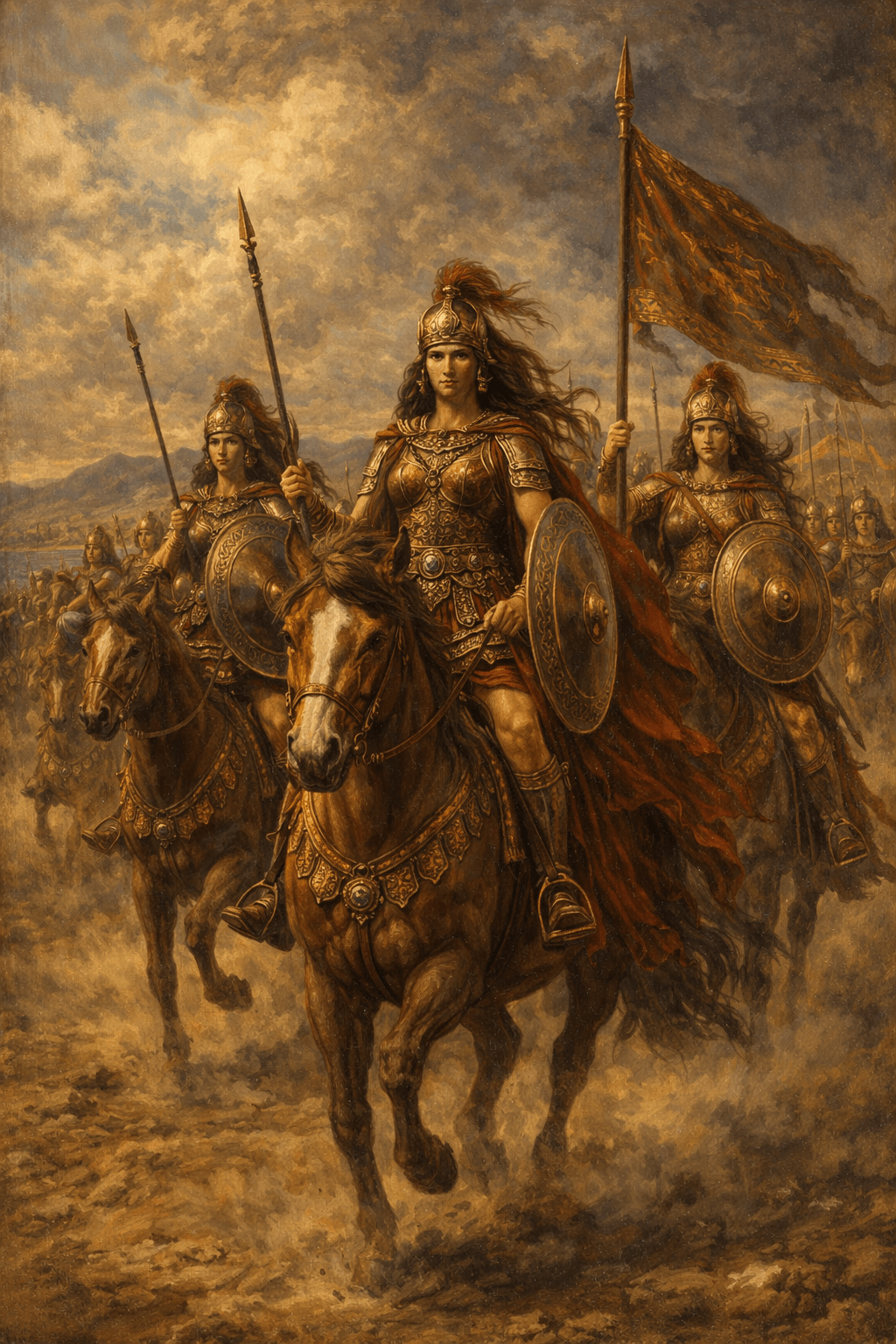
2) The Amazons, Daughters of Astarte
In this narrative, the Amazons are the daughters of Astarte and Ares, a direct extension of Phoenician warrior blood. They were not a static mythical tribe, but an organized female society: queens, a full army of women, trained in spear and bow, in horsemanship, and active in hunting, war, and administration. They are said to have had a kingdom on the shore of the Black Sea between the Halys and Cappadocia, with cities such as Amaseia and Amisus, making their presence political and military, not merely poetic.
The accounts record great battles: Hippolyta against Heracles, Penthesilea leading a female battalion in the Trojan War, and Tomyris who defeated Cyrus of Persia. They are also linked to migrations and conquests north of the Black Sea, and to the formation of the Sarmatian people after mingling with the Scythians, while women remained in the fighting ranks. The same tradition even claims that their maritime reach extended to the banks of the Amazon in the New World, presenting the Amazonian idea as a project of movement and settlement, not an isolated event.
For this reason the Amazons remain an early reference point for the idea of the Lebanese woman who is not confined to the household: she fights, founds, and governs destiny. That same idea returns in the history of Maronite women in a more explicitly Christian form: heroism joined to faith, dignity, and public action, not to passing reaction.
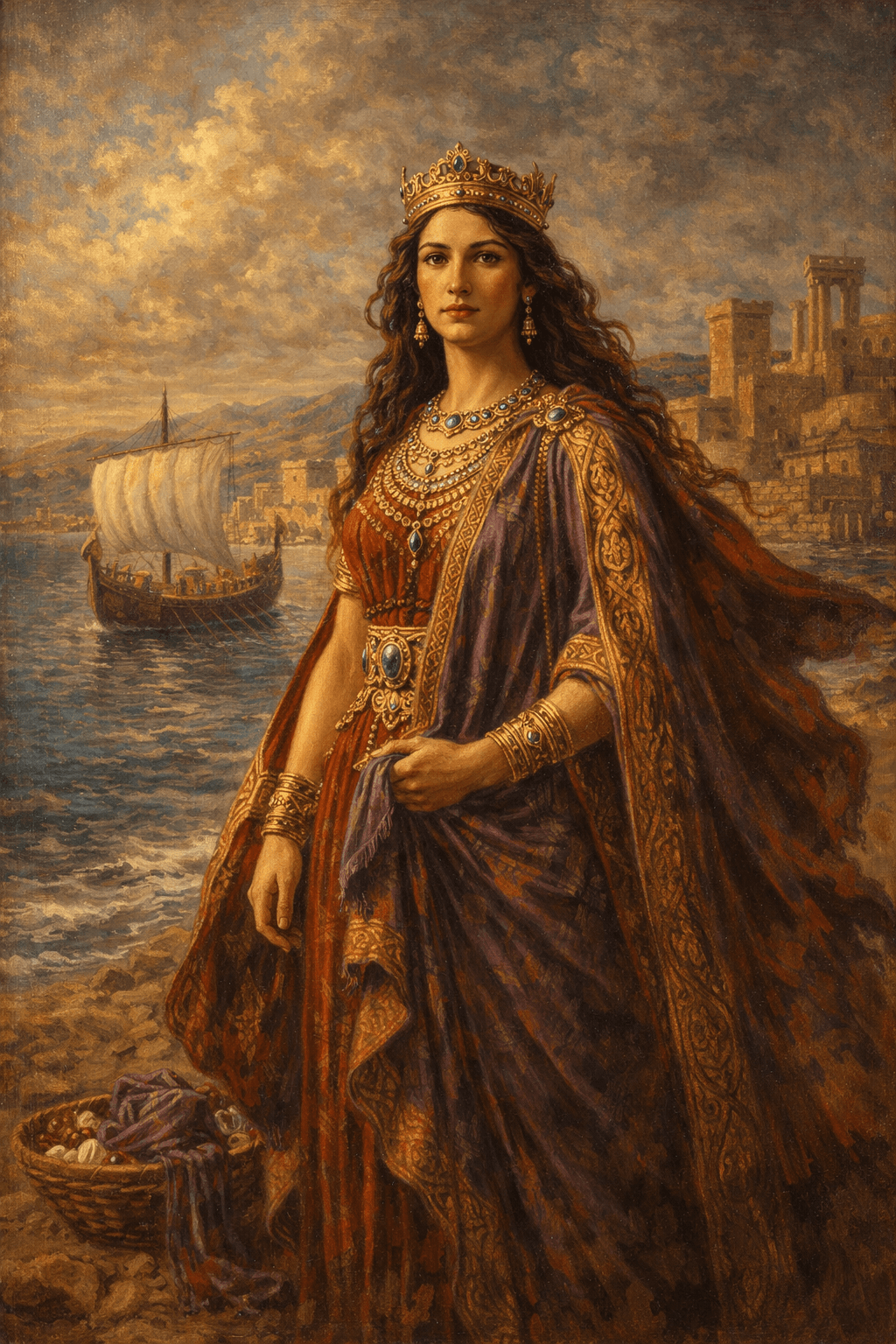
3) Europa of Tyre
Europa, daughter of Agenor king of Tyre, is presented as a decisive figure in the history of the Mediterranean: her abduction from the Tyrian coast ignited a chain of reciprocal wars between Phoenicians and Greeks, later expanding into wider conflicts. More importantly, her name passed from a person into geography, until “Europe” became the name of an entire continent. In this sense, Europa is not a minor figure in another’s story, but a political and civilizational turning point.
After her abduction, her brothers went out in search of her, and from that movement a new wave of foundations began: Cadmus reached Greece, built Thebes, and brought with him the alphabet, maritime arts, metals, and weaving. Then Europa’s lineage appeared in Crete through Minos, who built a great sea power, extended his influence over islands and ports, and left behind the Minoan civilization that became a base in early European history. Thus her name became linked to real foundations: cities, writing, and a maritime state.
Europa’s value in our path is that she offers the model of a woman whose name changes the map of history. This is precisely what explains her place in the Lebanese Christian imagination: woman is not an appendix to the narrative, but may be the very title under which cities are built, knowledge is transferred, and civilizations take shape.
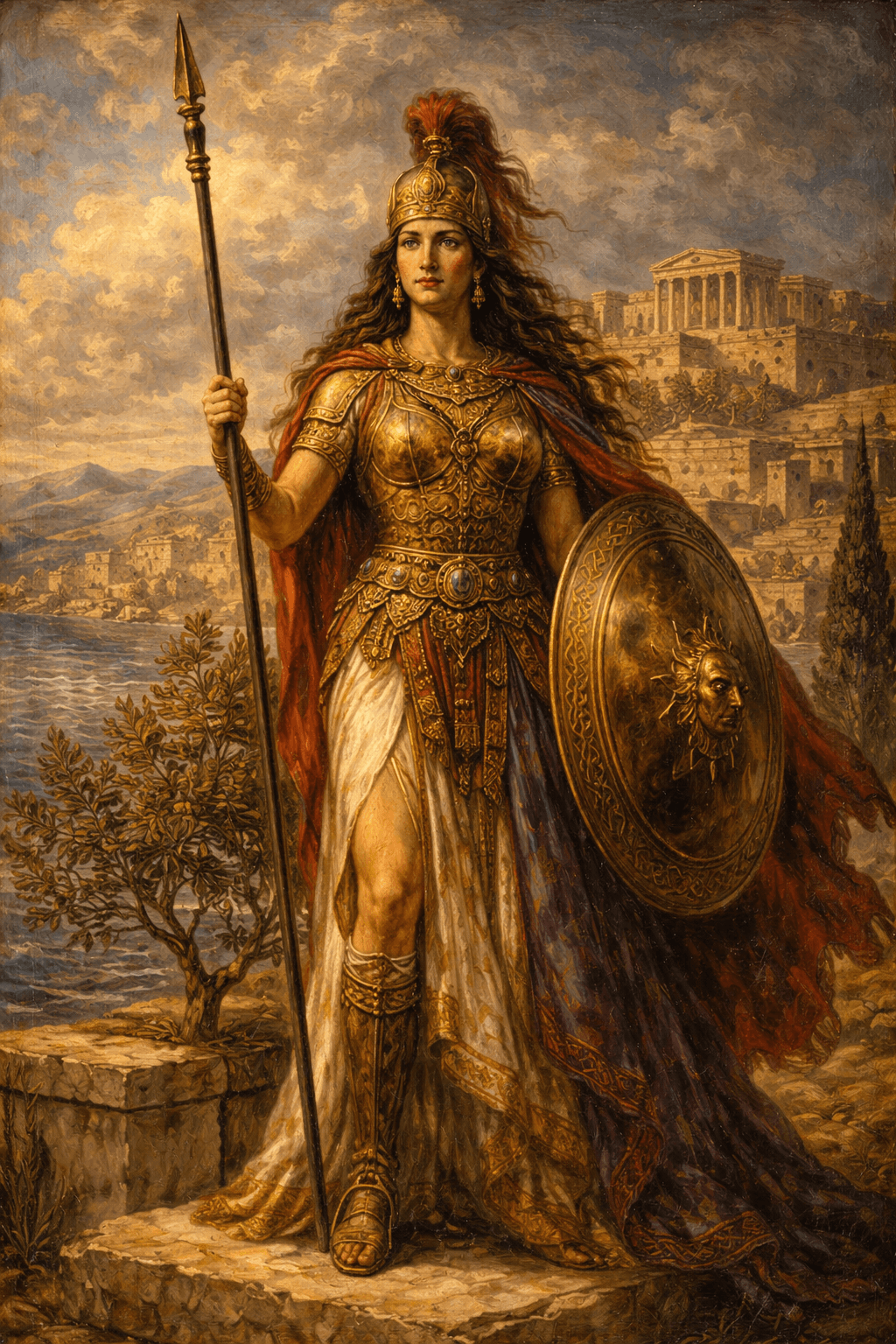
4) Athena, Lady of Wisdom and War
Athena, as understood in this line of thought, is more a Phoenician extension of the name Anat/Tanit than an isolated Greek figure. She was the protectress of the city of Athens, but she was also worshipped in Thebes under the title “Athena Onga.” She was connected with the founding and protection of the city, and with the ordering of rule and warfare alike: helmet, shield, spear, and with them the olive tree as a symbol not only of war but of civilization. Thus she appears as a force of state: a mind that plans and a sword that protects.
Athena’s practical significance lies in the way she bound security to knowledge: the defense of the city, the ordering of its affairs, the teaching of crafts, and the elevation of civil law. Even in war narratives, she is not shown as a mere machine of battle, but as an authority of judgment. It is this balance that made her “lady of wisdom and war” together, not one without the other, and kept her image alive in politics, the arts, and classical architecture.
From here Athena may be read as a symbolic prelude to what the Maronite woman would later become: disciplined leadership, defense of society, and a role in education and construction alongside confrontation. She is an early form of morally ordered strength, not chaotic force.
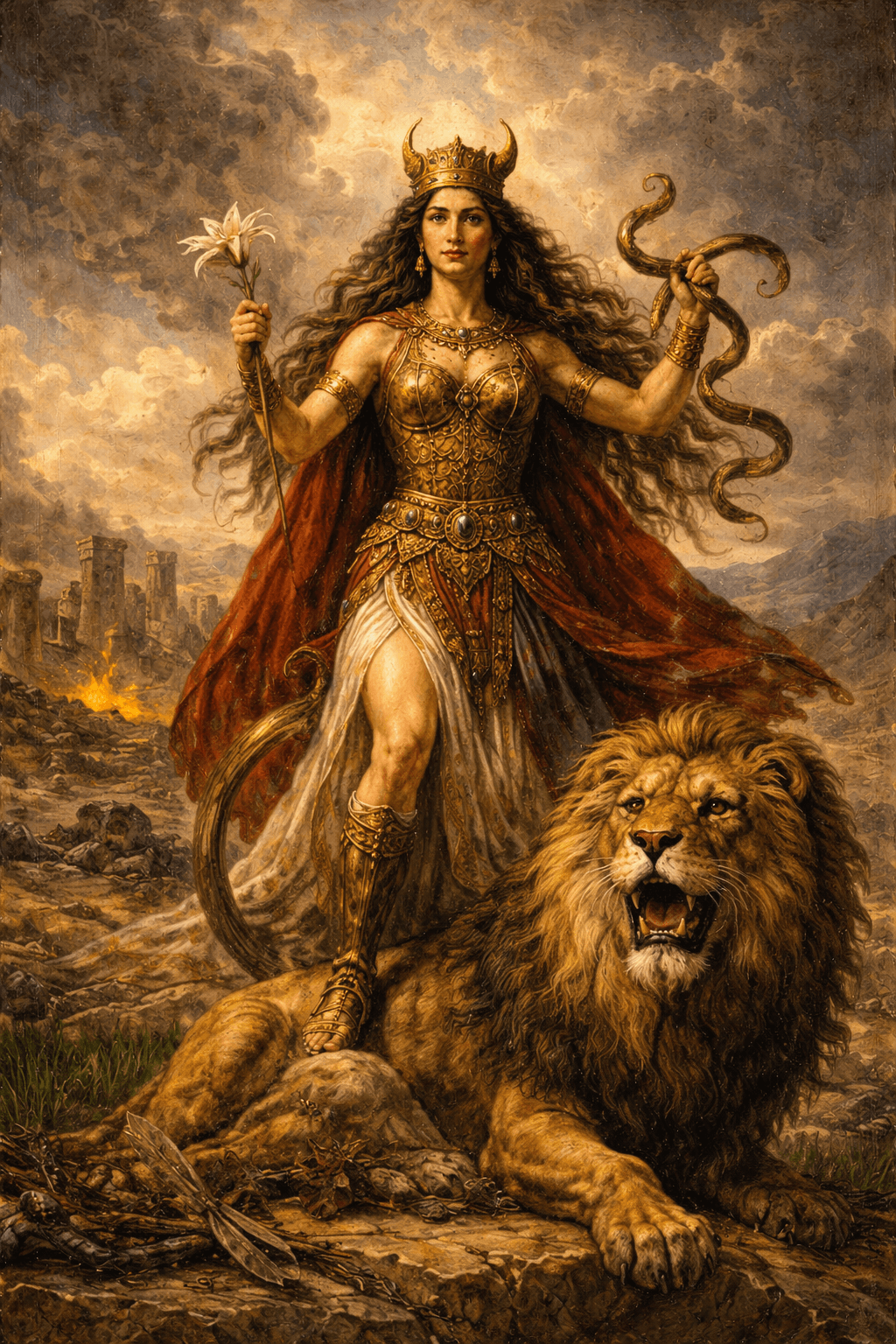
5) Anat
Anat is the warrior virgin in the Ugaritic texts: daughter of El, guardian of chastity and marriage, and at the same time possessor of fierce martial force. The texts describe her as a moral authority confronting sexual disorder and defending the sanctity of covenant, then as a political authority to whom the king turns in times of distress for guidance. In this sense, Anat is not “a goddess of one function,” but an integrated order: ethics, judgment, and strength.
On the field of war, Anat is drawn standing upon a lion, holding a lily and serpents, and in the epics she crushes her enemies and then anoints the king with the oil of strength from the horn, granting him legitimacy in war and rule. In the sphere of cultivation, she is linked to the fertility of the fields and the peace of the land after victory: “Sow love in the soil and pour peace into the heart of the earth.” Thus she joins military decisiveness to the building of life.
This very pattern is what later returns in the Maronite imagination: a woman who defends when needed, builds when the battle subsides, and keeps the standard of dignity higher than the logic of domination. For this reason Anat remains a central interpretive key for understanding the heroism of Christian women in Lebanon.
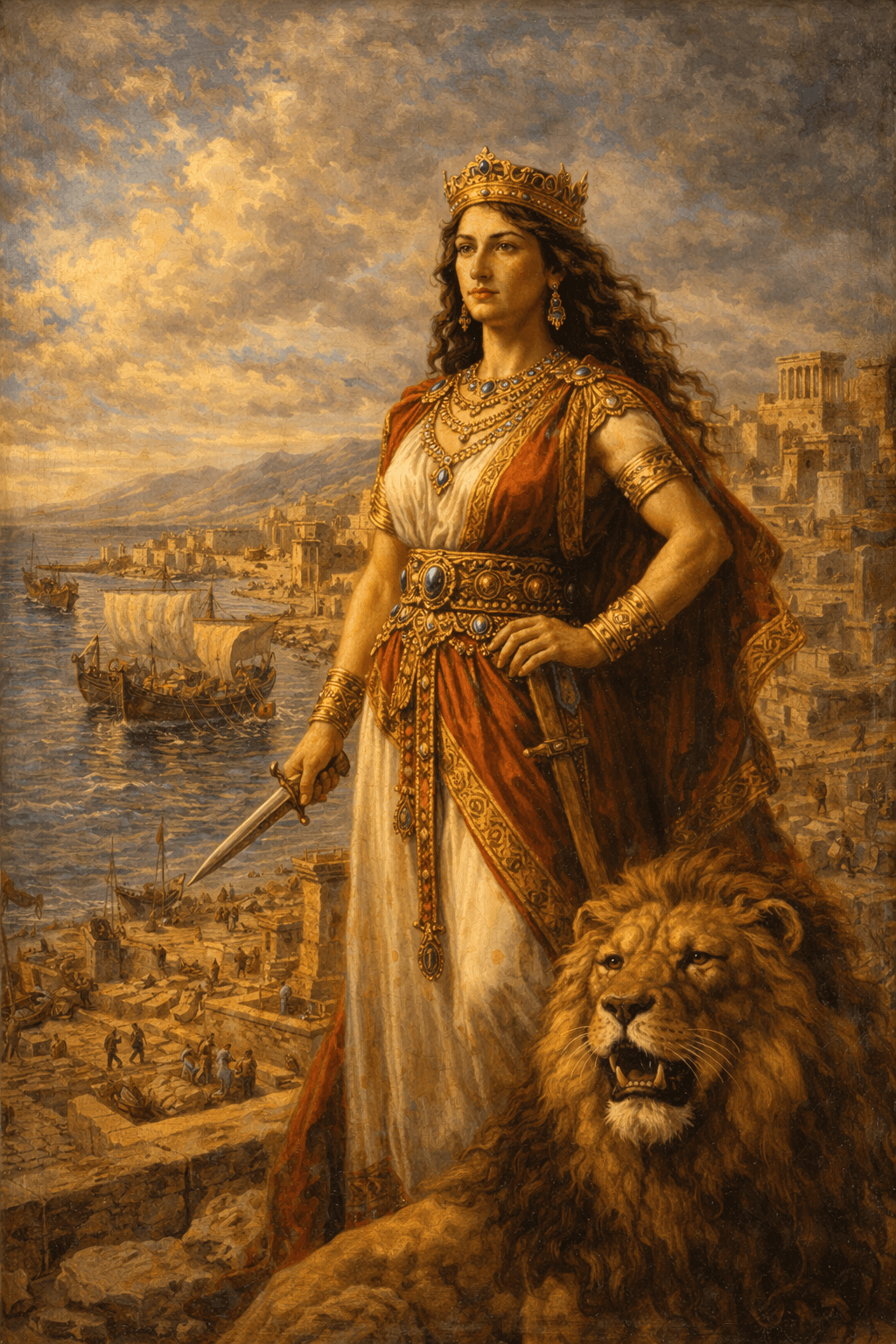
6) Dido (Elissa), Founder of the African Continent
Dido, or Elissar/Elissa, daughter of the royal house of Tyre and granddaughter of Ithobaal, is one of the most decisive political figures in Phoenician history. After the crisis of rule in Tyre and her clash with Pygmalion, she led the great migration across the sea, landed on the African coast, and established the nucleus of Carthage around the citadel of Byrsa. From the beginning she acted as a maker of state: gathering elites, organizing authority, and turning a migrant community into a lasting political center.
Her greatest achievement is that Carthage did not remain merely a city of refuge, but became a maritime and commercial power: cities and colonies in the western Mediterranean, harbors, a fleet, trade networks, and routes of exploration. From this world emerged Hanno’s voyages along the African coasts, and expeditions into the deep desert and the far west. Her project, therefore, was not simply the defense of survival, but the founding of a productive and influential civilization for many decades.
And when Carthage faced a threat touching its sovereignty and dignity, Dido chose to sacrifice herself by dagger and fire rather than surrender the city or suffer humiliation. Thus her image remained on the coins of Tyre, Sidon, and Carthage itself—not only as a migrant princess, but as a leader who built a city and protected its meaning even unto death.
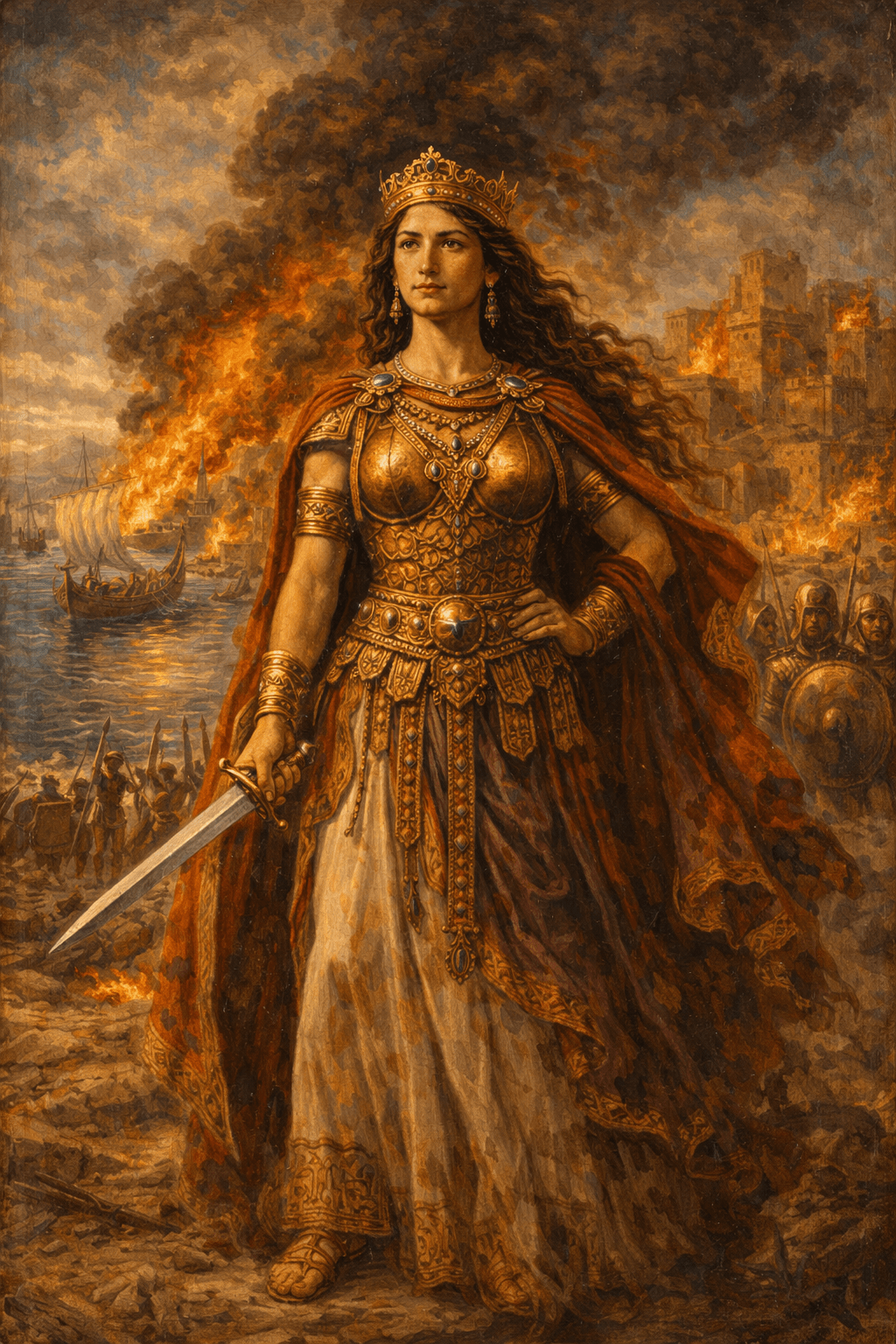
7) Ashtorim, Heroine of Sidon
Ashtorim was a free daughter of Sidon at the height of the clash with the Persian Empire. In the time of the Phoenician revolt against Persia, Sidon stood at the head of the confrontation: it prepared a large war fleet, coordinated with other Phoenician cities, received support from Egypt and Greece, and won early victories against Persian forces. But the balance turned after immense Persian mobilization and internal political betrayal opened the road to catastrophe.
As the Persian army approached, and with the certainty that the outcome would be captivity and humiliation, the people of Sidon made the decision: “death rather than surrender.” Ashtorim advanced at the front, walked with the women and young girls into the flames burning through the city, and cast herself into them to prevent the shame of captivity. The narrative speaks of a great tragedy in which tens of thousands fell amid fire and battle, yet it fixed in memory a decisive moral position: dignity above life.
Ashtorim’s importance lies in the fact that she carried heroism from the level of individual defense to that of a collective decision led by a woman. For this reason her name remained alive in the Lebanese Christian narrative: a model of a woman who makes freedom and chastity a matter of sovereignty, and binds the destiny of the city to the dignity of its women and men alike.
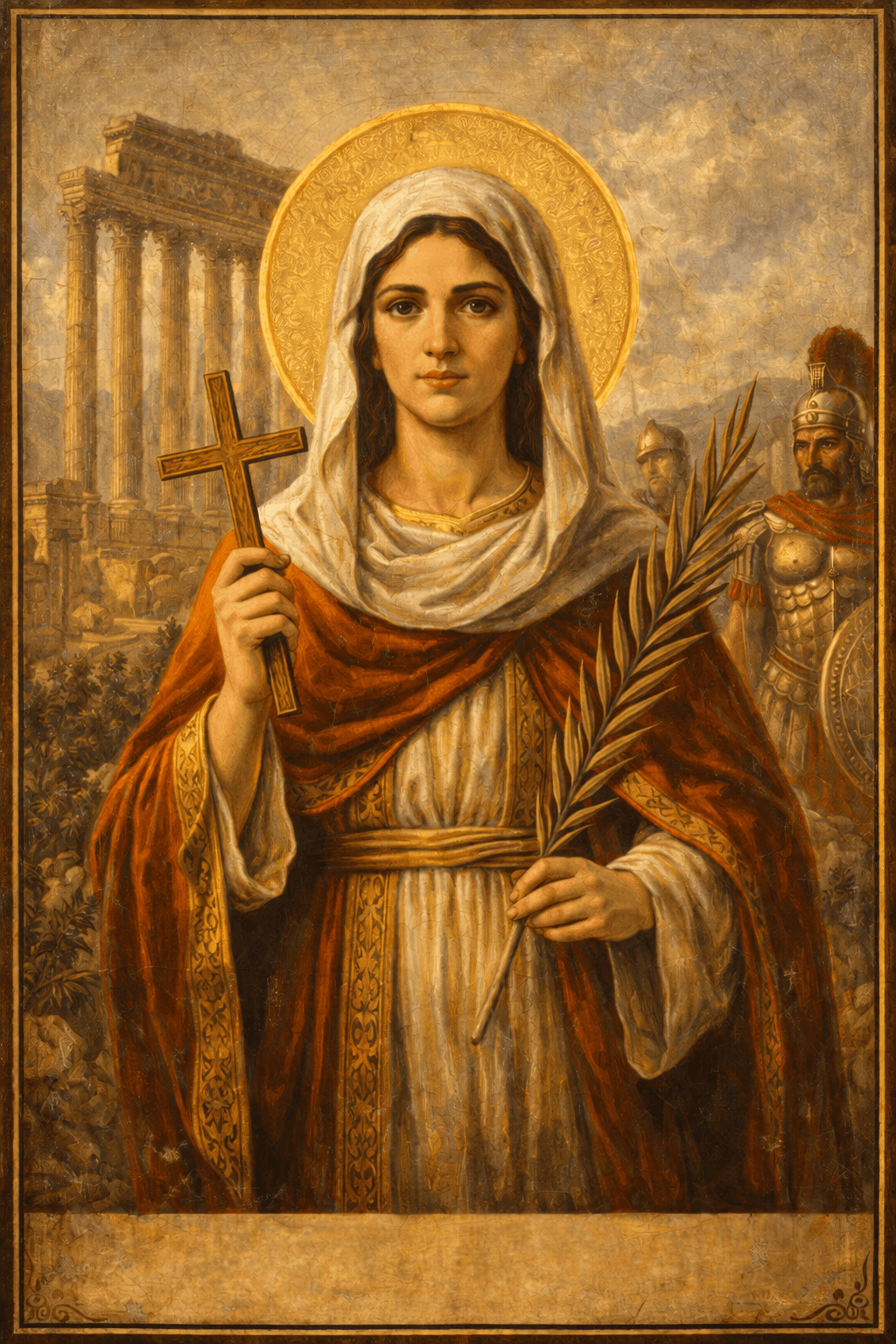
8) Saint Eudokia of Baalbek (+114 AD)
Eudokia is presented as a Lebanese Christian woman from Baalbek who lived in the early Christian era, when the region stood under Roman rule and endured acute religious and moral conflict. What most distinguishes her story is that it represents a radical passage from an old life into a new life in Christ, followed by complete steadfastness unto martyrdom.
Eudokia’s strength does not lie in a passing emotional moment, but in a clear path of repentance: a deep interior transformation, then commitment to the faith, then readiness to pay the price. This is what made her life influential in Christian memory, because it reveals the power of grace to change a person inwardly and then make that person a living witness to the truth.
In the context of Lebanese Christian women, Eudokia appears as an early beginning of a distinct female line: a woman not defined by her past but by what she became, and one who does not keep faith as a private matter but carries it bravely before authority. For this reason her name remained in memory as an image of hope and spiritual victory, not merely a memory of suffering.
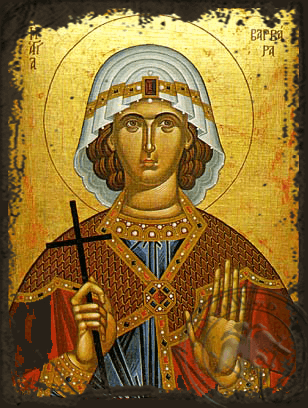
9) Saint Barbara of Baalbek (+237 AD)
Saint Barbara is the most renowned Christian daughter of Baalbek in the Lebanese and Eastern imagination, and her life became one of the most present martyr narratives in popular devotion and ecclesial memory. What gives her this place is not only the severity of the torments she endured, but the clarity of her character: a young woman steadfast, intelligent, pure, and fully aware of what she believed.
Her life draws the image of a daughter who first faced the authority of the household, then the authority of the governor, then the violence of the pagan state, without withdrawing. In this progression her true heroism appears: it was not resistance in a single moment, but an ever-rising steadfastness under pressure, temptation, torture, and public humiliation. Even when the suffering intensified, her position remained a testimony of faith without compromise.
Barbara’s importance in the Lebanese Christian narrative increases because she became a comprehensive female model: chastity, courage, patience, and dignity. Thus her life did not remain confined to the history of Baalbek, but became part of the living Christian memory of the Lebanese, especially the Maronites, as an example of martyrdom that cannot be defeated, however fierce the oppression.
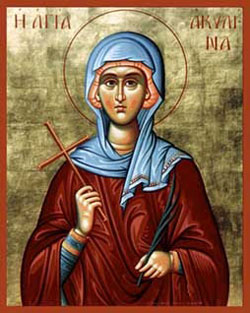
10) Saint Aquilina of Byblos (+293 AD)
Aquilina is the Christian daughter of Byblos, and her appearance in this section is important because it links one of the oldest Phoenician cities with the chain of sanctity and martyrdom in the Roman age. In her life we see a young Lebanese Christian woman facing persecution in her youth, yet with a steady spirit, a clear voice, and an unshaken faith.
What distinguishes Aquilina is that her martyrdom comes at a historical moment when Byblos still bore a great pagan and civilizational inheritance, while the features of Christian transformation were beginning to appear strongly within it. For this reason her story seems more than an individual tale: it is a sign of the city itself passing from the memory of the ancient gods into the light of Christian witness.
Her name remained linked to Byblos, to her shrine, and to its local memory, and this is very important for writing the later history of Maronite women. The presence of a martyr such as Aquilina in Byblos makes the city part of the spiritual chain that preceded Maronitism and prepared the way for it: Lebanese women who carried the faith courageously and paid its price with joy and steadfastness.
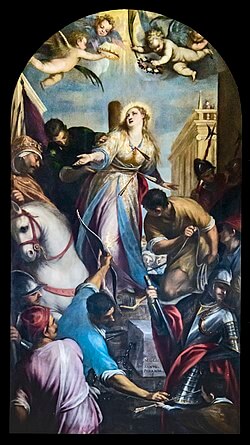
11) Saint Christina of Tyre (+300 AD)
Christina is the Christian daughter of Tyre, and among the martyrs of this section she is one of the most present in terms of the breadth of her story and the force of its scenes. She belonged to a house of authority, for her father was governor of the city, and this detail is essential: her martyrdom was not a confrontation with distant persecution, but a direct clash within the very house of power.
Christina’s strength begins with her inward search for truth, then with her learning and embracing of the Christian faith, and after that with her transformation into a bold witness unafraid of authority or of the pagan symbols that surrounded her. When she entered the place of torture, no fear of the defeated appeared in her, but rather the joy of one who knows why she suffers. For this reason her life became linked in Christian memory not to tragedy alone, but to the image of luminous courage.
Christina’s importance for Lebanese Christians, especially the Maronites, is that she unites noble lineage with evangelical steadfastness: a young woman from a powerful house who chose a higher strength, so that her martyrdom became a victory of faith over authority, of grace over violence, and of light over the cruelty of the Roman state.
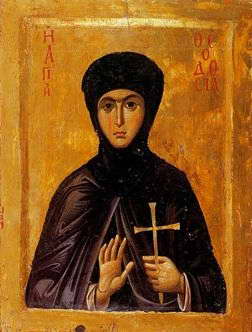
12) Saint Theodosia of Tyre (+307 AD)
Theodosia is a young Lebanese Christian woman from Tyre, raised in piety, prayer, and a life of chastity, and she entered the arena of martyrdom with a calm spirit and astonishing courage. This beginning matters because her heroism is not presented merely as a sudden change, but as the fruit of deep spiritual formation that shaped a personality ready for confrontation.
When persecution intensified in the early fourth century, Theodosia moved from private devotion into public martyrdom. She faced the governor with boldness and clarity, and endured suffering without breaking. In her life there appears clearly one of the forms of Christian heroism beloved by the Lebanese: gentle strength, steadfastness without noise, and a faith that needs no display in order to be great.
Theodosia’s place in this section is that she completes the Christian image of Tyre after Christina: the same city gives birth to successive female martyrs, as though the old Phoenician memory were being replaced by a new memory of sanctity. For this reason Theodosia remains close to the heart of Maronites and Lebanese Christians as a model of courageous purity that endures to the end.
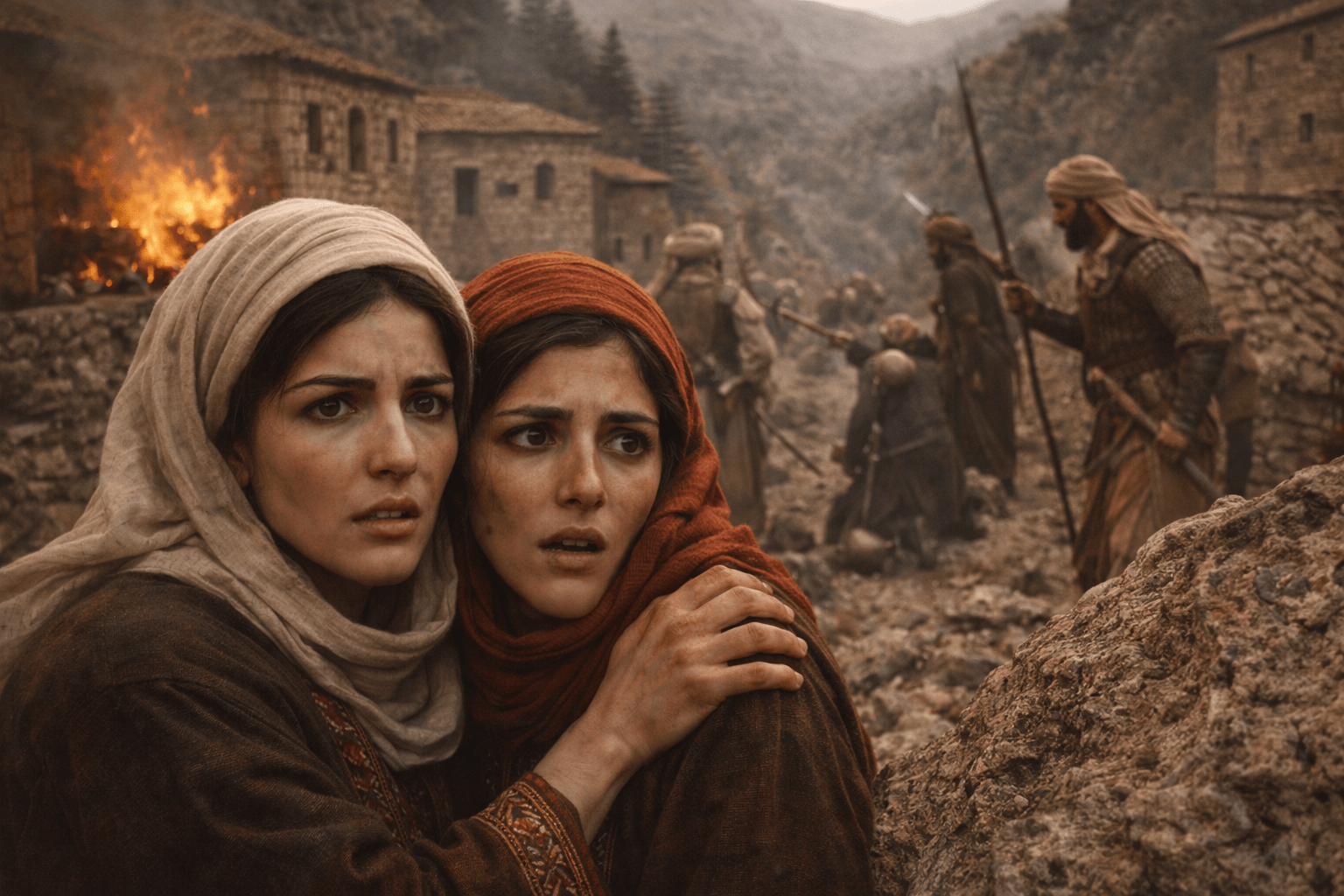
13) Arabism and its Danger to Women
When Christians collided with the Arab world, the conflict was not only over political rule, but over the very image of the human being: over freedom, the place of woman, the meaning of home, virtue, and authority. The danger was especially severe for the Lebanese Christian woman because the difference between the two visions was not a minor cultural detail, but a difference in ethics, religion, and in the way society viewed the body, dignity, and destiny.
In this climate there arose a real fear of everything that could reduce woman to an object of oppression: humiliation, objectification, enslavement, captivity, and all that follows from these in the crushing of her human worth. For this reason the Maronite woman did not understand the conflict as a distant political dispute, but as a direct threat to her sanctity, her freedom, her faith, and to the very shape of Christian life itself.
From here her position became decisive: she stood with man not as a subordinate, but as a guardian of human dignity. She rejected every form of degradation, hostility, and enslavement, and held fast to the Christian vision of the human person: one whose value cannot be sold or violated. Thus her defense became a defense of Christian Lebanon, and of the human person as such.
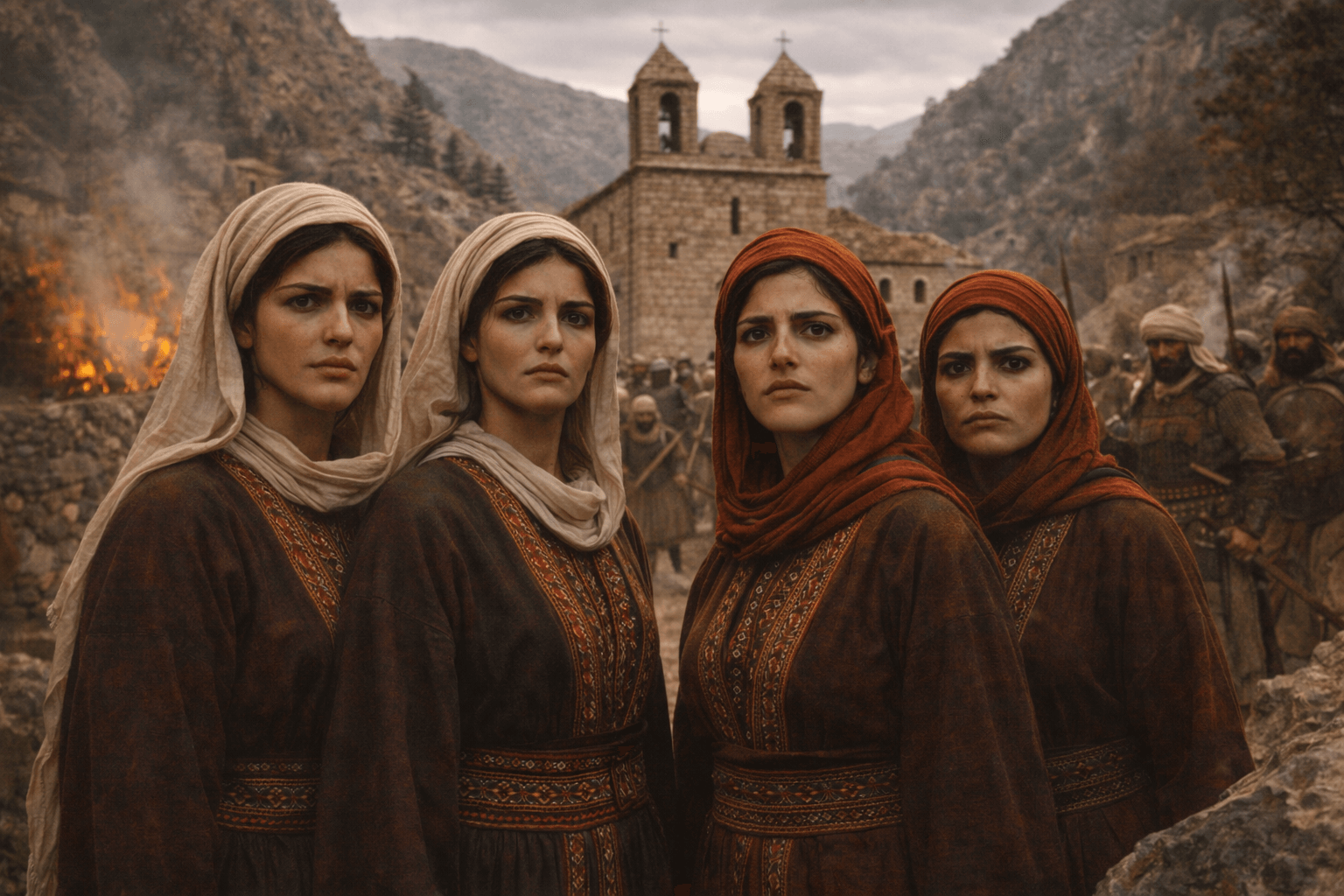
14) Maronitism as Message and Strength
The Maronite woman is the daughter of a community that did not understand Maronitism as merely a liturgical identity, but as both message and strength. In this understanding, message means a living spiritual and moral witness that draws others by example, not by coercion; and strength means the protection of that message and its people when faith, homeland, and dignity come under threat.
For this reason Maronite discourse insists on distinguishing between imposing religion by force, which is injustice, and using force in defense of the human person, freedom, and the trust of faith. From this was born the firm Maronite model: a society that builds, prays, and fights when necessary, and that sees the defense of dignity as a duty, not an option.
Within this context women were never outside the equation. The Maronite woman shared in carrying the message through example, zeal, and steadfastness, and she also shared in preserving the environment that protects it: the home, the community, and the land. Thus Maronitism remained, in the imagination of Lebanese Christians, not only a doctrine to be proclaimed, but a civilization to be guarded; a message that cannot live unless it finds men and women ready to defend it both spiritually and materially.
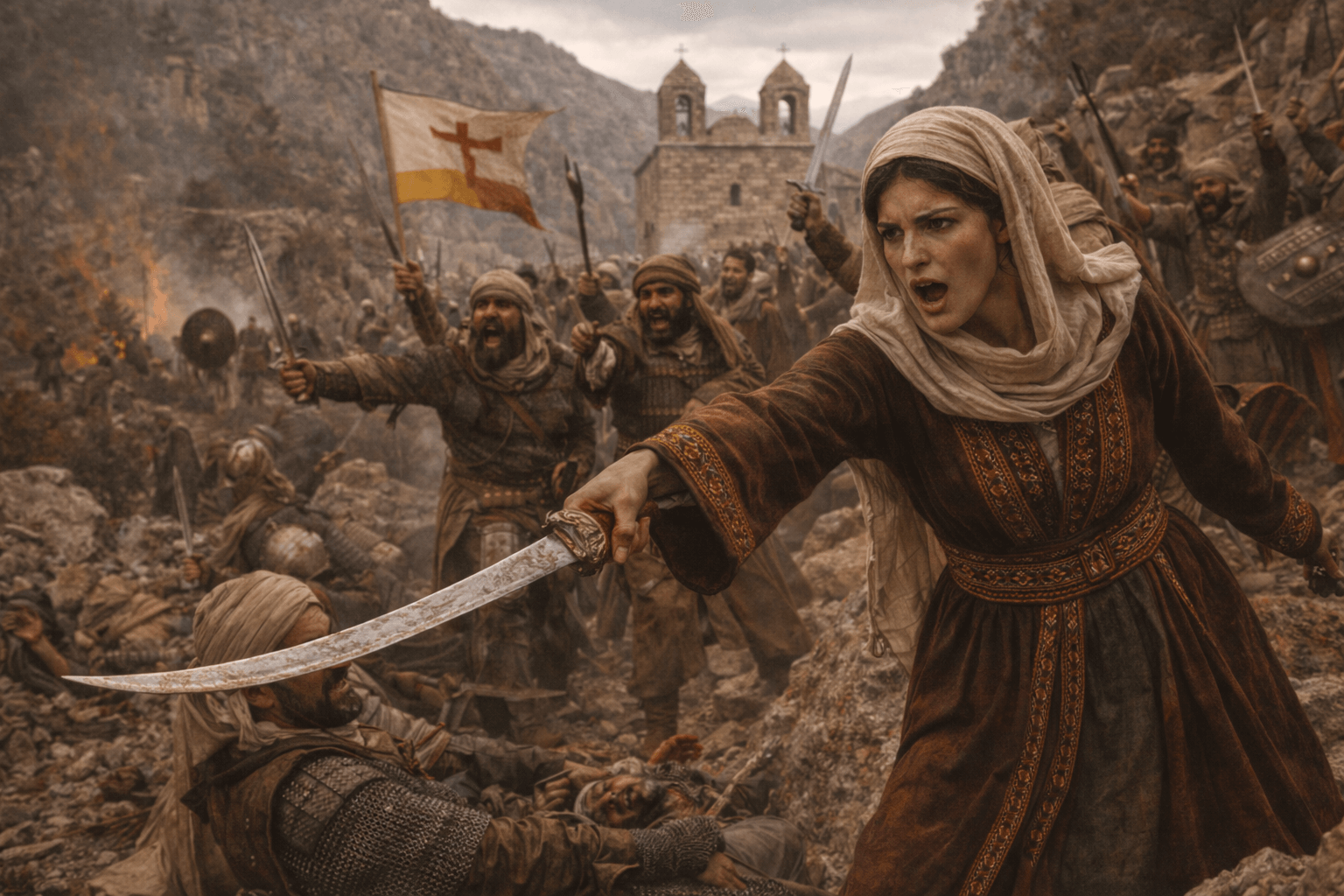
15) The Maronite Woman Fights alongside Man
Here the Maronite woman is not merely a moral symbol, but an active partner in battle. The narrative describes her accompanying the men to the fighting lines, carrying food, water, and ammunition, tending the wounded, and standing firm under fire. Even when husband or son fell, she is portrayed as restraining her lament lest weakness spread through the ranks. This is moral and martial heroism together.
The image reaches its height in the example of al-Qlayaa in 1920, when the Christian villages of the South were exposed to a wide assault following the events of Marjeyoun. In the narrative of that battle, the women of al-Qlayaa are not shown in the rear, but at the barricades themselves: carrying water and cartridges to the young men under a hail of bullets, while the defenders’ courage is strengthened by the memory of Saint George and the spirit of Maronite chivalry.
For this reason the role of the Maronite woman cannot be reduced to consolation or waiting. In al-Qlayaa and elsewhere she formed part of the very resilience of society: preserving life, sustaining combat, preventing psychological collapse, and sharing in the defense of the village, the faith, and dignity. Thus the meaning of this chapter becomes clear: Lebanese Christian society fought with both its wings, not with one alone.
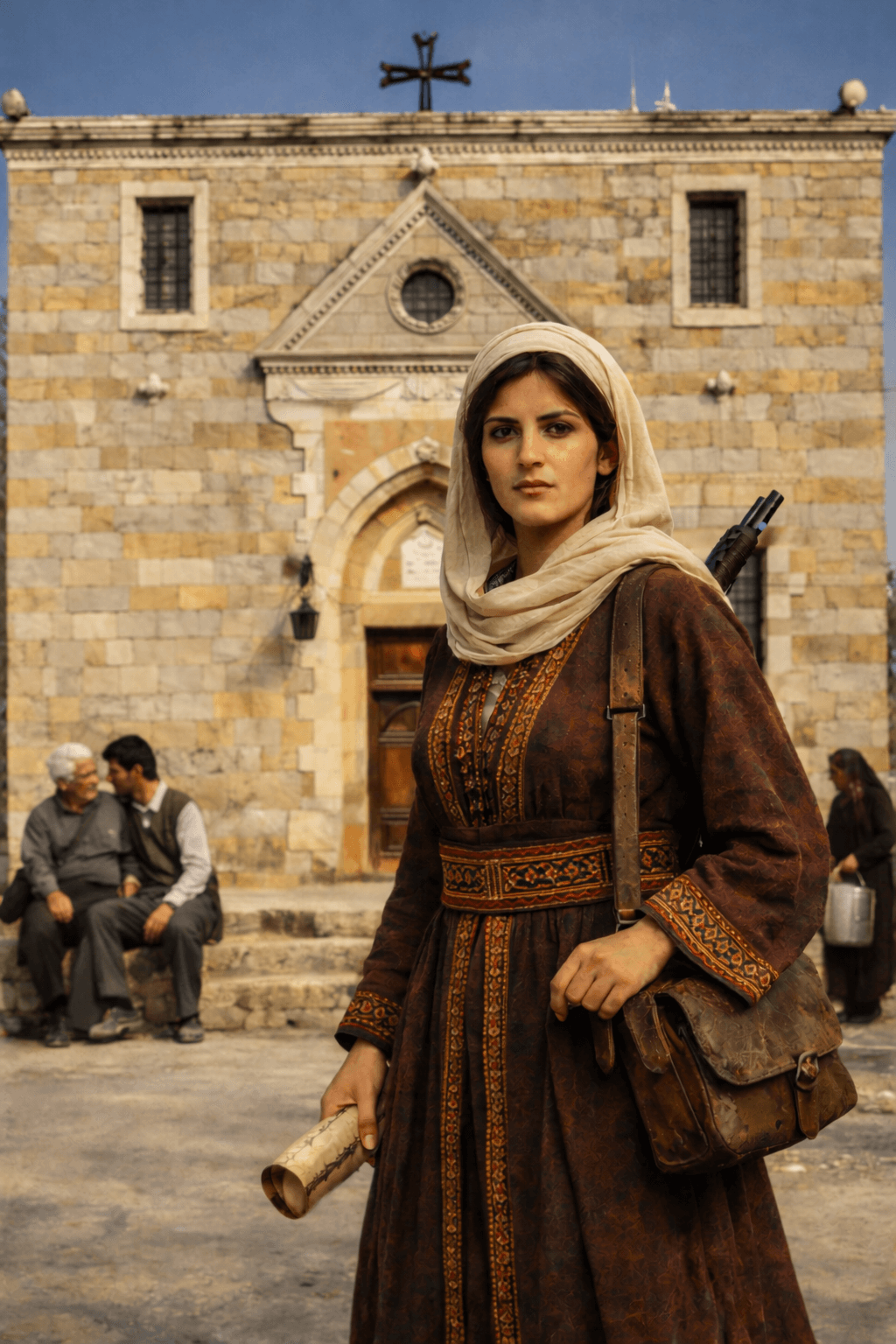
16) Alia Francis of al-Qlayaa
Alia Francis is the Maronite daughter of al-Qlayaa in the South, daughter of a village known for steadfastness, courage, and loyalty to Lebanese Christianity in the hours of danger. She came from a setting that joined chivalry with piety, and zeal for the people with bravery in the field. Her story, as it is told, is not only the story of a fighter, but of a woman who united martial skill with lofty virtues: a vowed virgin, a healer by instinct and practice, and a horsewoman in the hour of danger.
Alia was marked by a rare ability to move between roles that seem far apart: she treated the sick and performed procedures without payment, comforted the poor, built churches, reconciled the quarrelling, then mounted her horse and bore arms when Christian villages came under threat. In her life, al-Qlayaa itself is also honored: a village that did not merely give birth to a heroic woman, but to an environment that raised courage together with faith, and service together with dignity.
The greatness of Alia Francis is that she presents the full image of the Maronite woman: strength without cruelty, holiness without weakness, and leadership expressed in service as much as in confrontation. For this reason she remained in memory not as the heroine of a single battle, but as a school of Christian courage, dignity, and the common good.
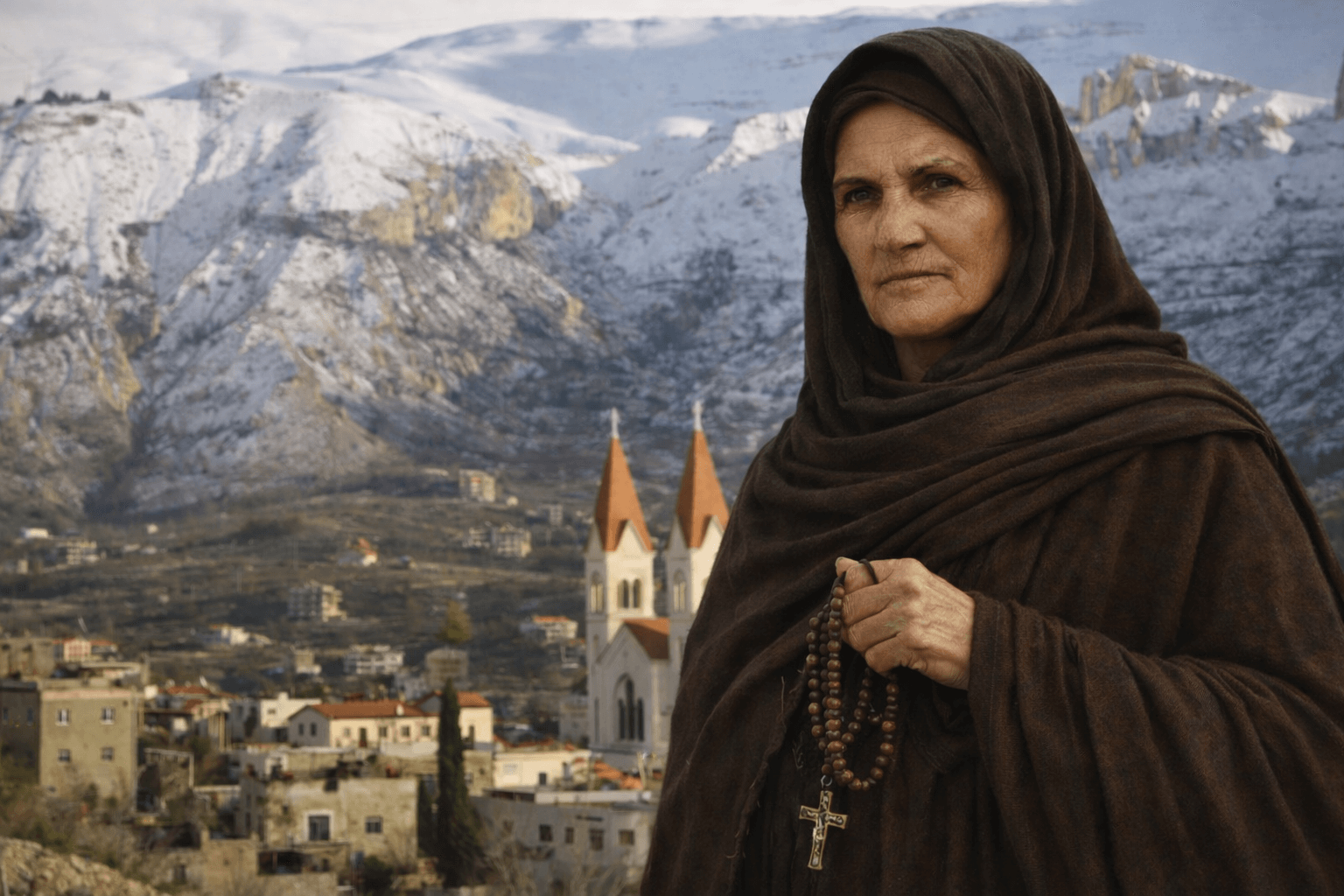
17) Sayde Geagea, Heroine of Bsharri
Sayde Geagea is the Maronite daughter of Bsharri, daughter of a mountain setting that preserved the faith with arms as it preserved it with prayer. In her life there appears a particular kind of heroism: not only the heroism of open confrontation, but the heroism of intelligence, presence of mind, and a purity that refuses to be trampled under threat.
The most famous scene in her story revolves around an extreme moment of danger in which she faced a brutal man who sought to humiliate her. She did not surrender and did not collapse, but turned the very moment into an opportunity for deliverance and response, using her courage and cleverness to decide the struggle and preserve her dignity. This is not merely a story of survival, but a clear declaration of a Maronite woman who sees her honor as part of the honor of the whole community.
For this reason Sayde Geagea is recalled in the Maronite narrative as the image of a woman who fights with her mind as with her sword, and who joins chastity to strength. She is a model of feminine heroism that refuses to let the body become a field of humiliation, but makes it instead a place of protected dignity and rightful defense to the end.
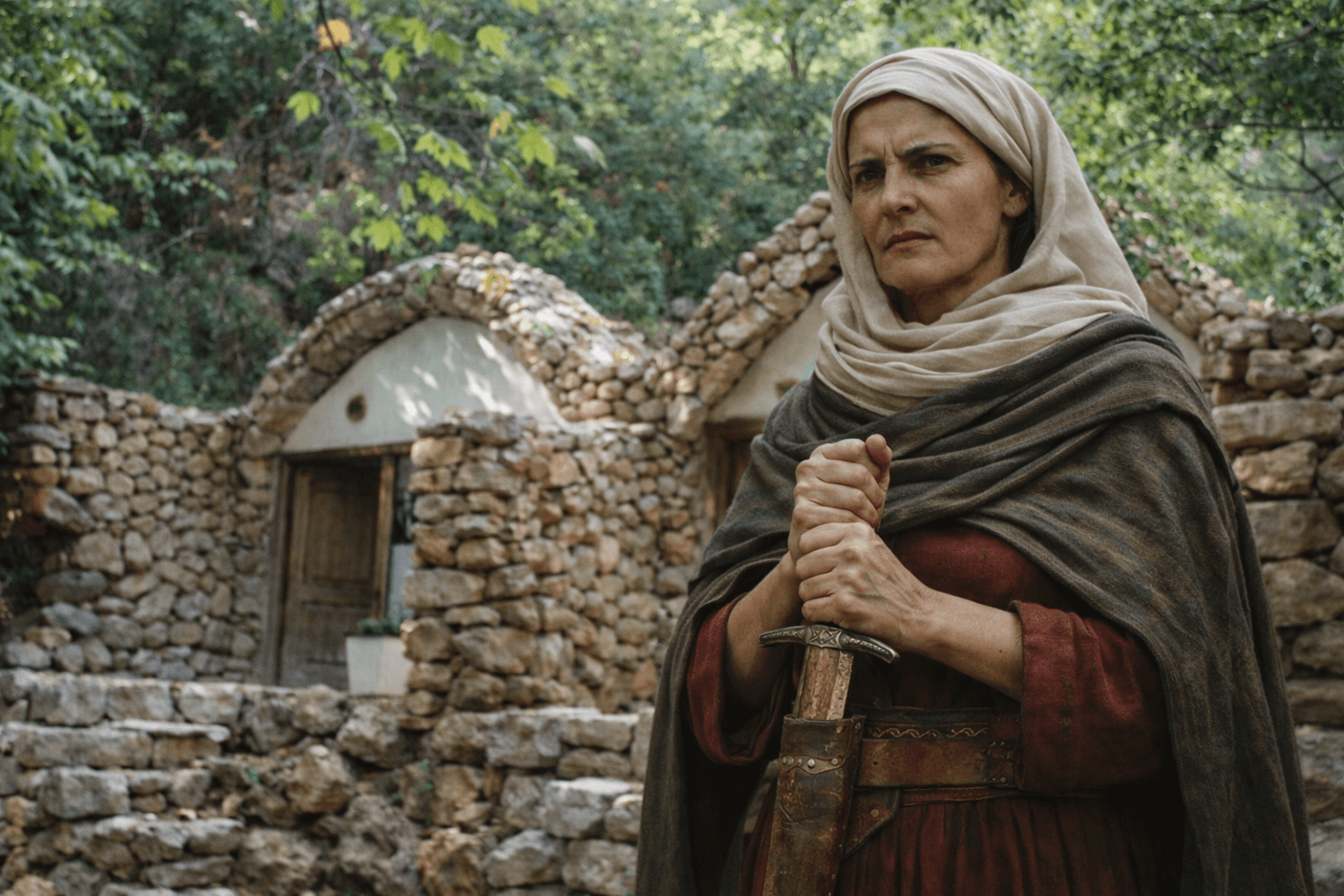
18) Raydeh, Heroine of Tannourine
Raydeh is the Maronite daughter of Tannourine, and her story comes from the heart of a mountain society that knew raids, violence, and direct threats to homes and women. What makes her striking in this chapter is that she is not remembered merely as a symbolic name, but as a young woman who entered into actual confrontation with strong men in a moment of danger, almost alone.
In the narrative attached to her, Raydeh is transformed from a gentle young woman into a lightning force when home and dignity are touched. She is not frightened by numbers, nor by the cruelty of aggressors, but answers with legitimate force that protects herself and her family. In this form she becomes a concentrated example of Maronite heroism in its raw shape: quick decision, boldness, and an absolute refusal to break.
Raydeh’s value in the article is that she shows that the defense of dignity in the Lebanese Christian environment was not confined to men, nor only to major figures. Even young girls were capable, in the hour of trial, of becoming a full line of defense for home, faith, and existence.
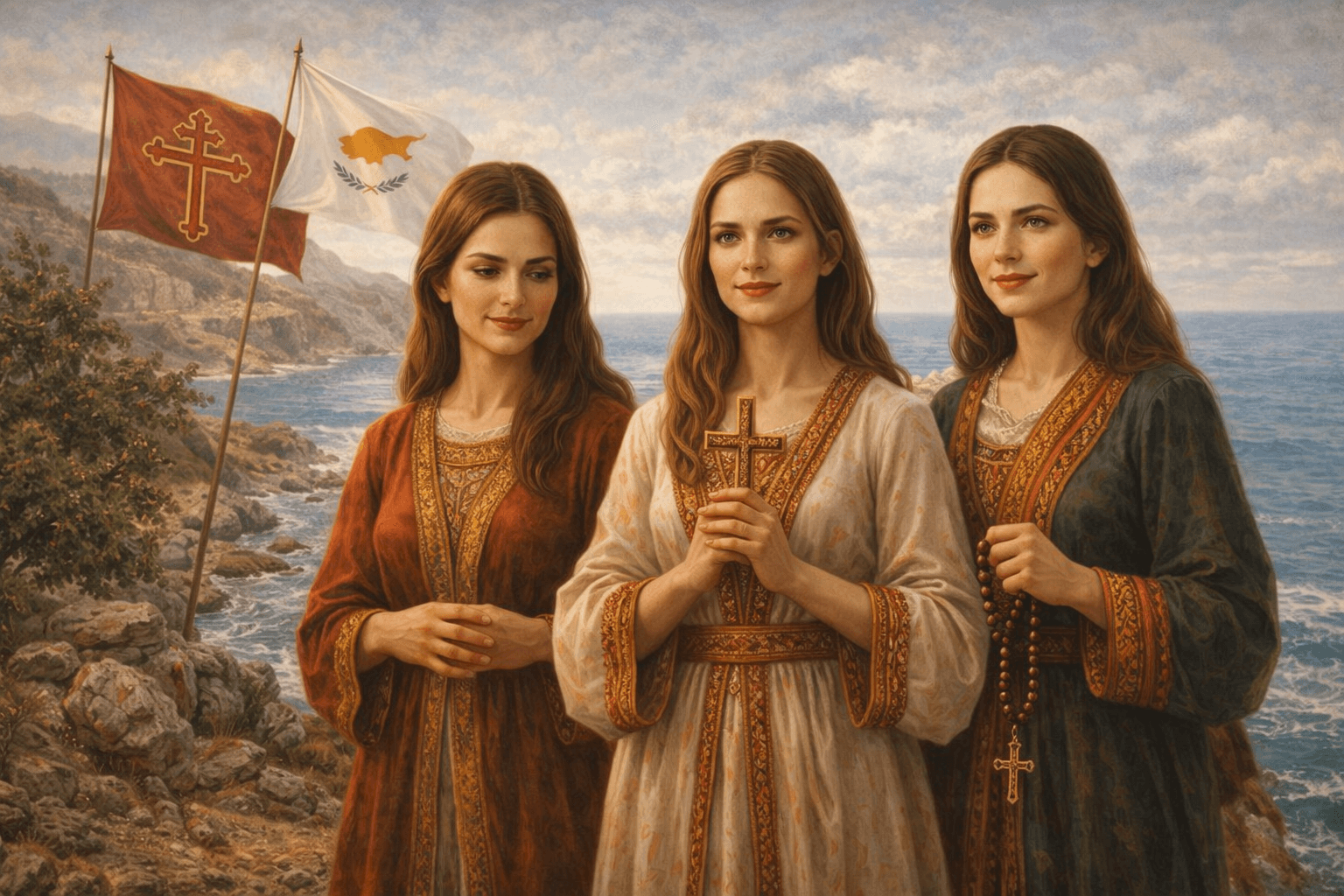
19) The Maronite Heroines of Cyprus
The heroines and martyrs of Cyprus were daughters of the Maronite community that reached Cyprus carrying with it its faith and identity, then faced the Ottoman invasion in the sixteenth century with harsh steadfastness and heavy cost. Here heroism does not appear in a single person alone, but in an entire female community that entered history through martyrdom and endurance.
The value of this chapter is that it reveals how the Maronite woman, even outside Lebanon, retained the same inner structure: holding fast to faith, rejecting humiliation, and remaining ready to pay the price when asked to surrender dignity or belief. Thus the women of Cyprus become a living extension of the Maronite woman of the mountain: the place changes, but the spirit does not.
This page of history is very important because it carries heroism from the level of local defense to the level of collective martyrdom. It is a reminder that Maronitism was preserved not only by male warriors, but also by women who faced invasion, pressure, and death, and refused to let their faith be torn from them or their dignity broken.
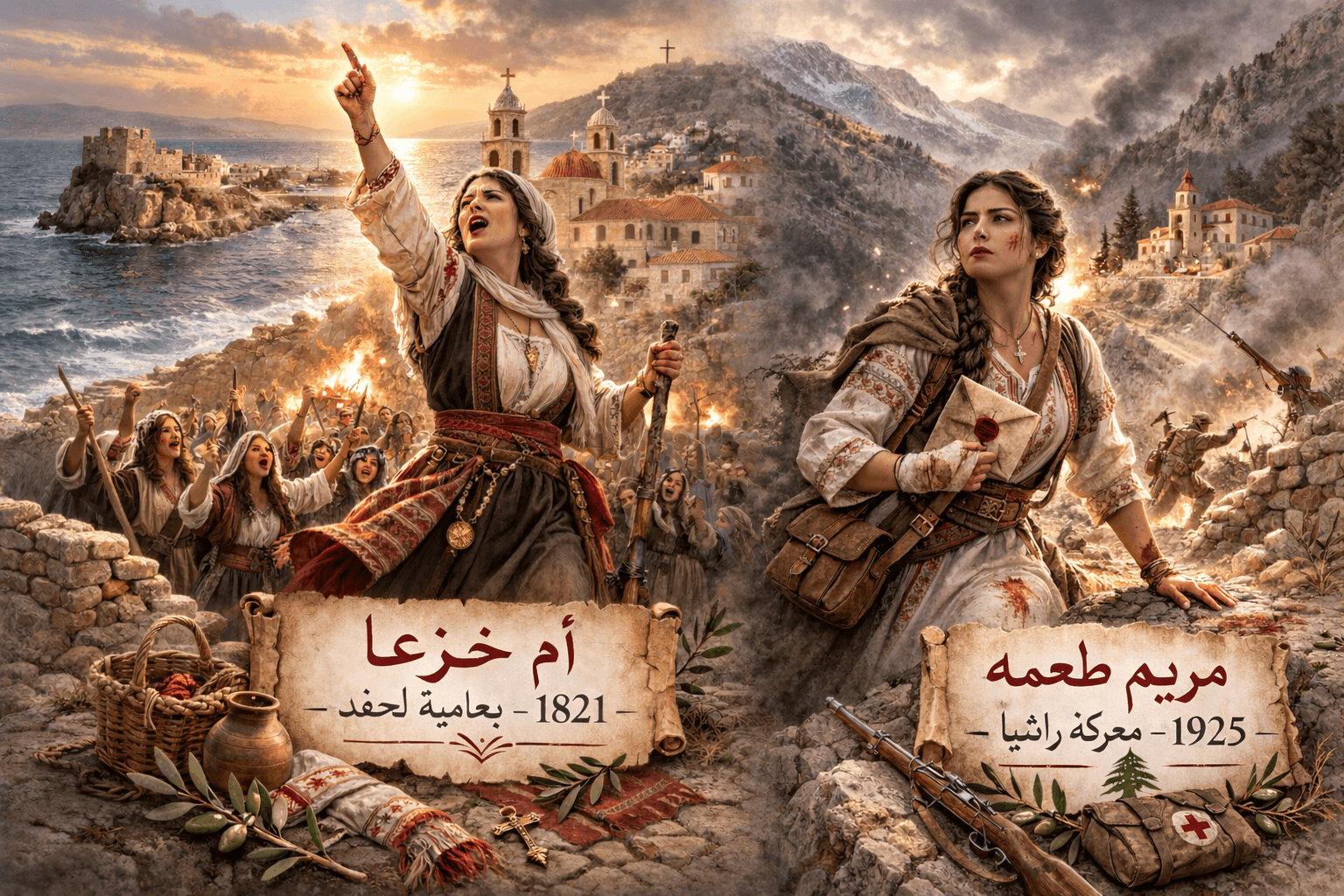
20) Umm Khazaa and Mariam Touma
Umm Khazaa was a Maronite woman from the Batroun region whose name became linked to the uprising of Lehfed in 1821, that is, to a popular revolt against oppression and forced taxation. Her greatness does not come from bearing arms alone, but from entering the field of confrontation with the women to stir the people to firmness, so much so that it was said the anger of the women frightened the emir and drove him to withdraw. Here woman appears as a force of mobilization and the breaking of public fear.
In a later scene from a different period of history, Mariam Touma emerges in the battle of Rashaya (1925) as another face of Lebanese Christian heroism: precise personal courage in the midst of fire. She slipped alone through the enemy lines to deliver a message to the garrison, and she completed her mission despite injury and bleeding.
The two women are joined by one thread: the Maronite woman does not wait for a role to be assigned to her, but imposes her presence when the community is threatened—once through cries and public encouragement, and once through silent initiative in the field under danger.
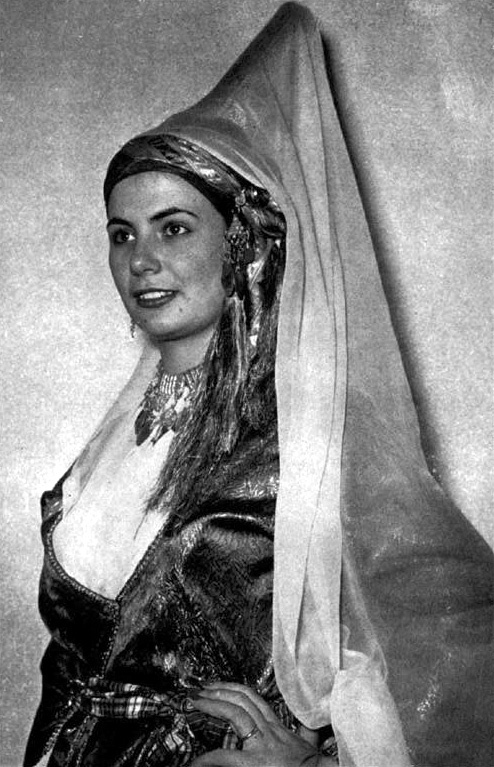
21) The Tantour: Crown of the Maronite Woman
The tantour is not a passing ornament in Maronite memory, but a crown of identity. It is a sign worn by the Maronite woman upon her head as a symbol of glory, strength, fertility, and dignity, and through it popular memory linked the Lebanese Christian woman to her ancient Phoenician roots without erasing the Christian transformation in meaning and spirit.
The narrative here insists that the tantour is not simply a traditional form, but a whole symbolic language: a horn of glory, a sign of elevation, and a mark of sacred marriage not to be trivialized. For this reason it belonged particularly to the married woman and accompanied her in the details of her life, in health and in illness, until it became part of the meaning of conjugal fidelity and Maronite dignity.
Most importantly, the tantour appears in this narrative as a cultural boundary as well: a garment that expresses the identity of the Maronite woman as she truly is, not as other settings wished her to be. For this reason the tantour remains, in the article, more than a piece of dress: it is a visual proclamation of a woman bearing upon her head a whole history, identity, and dignity.
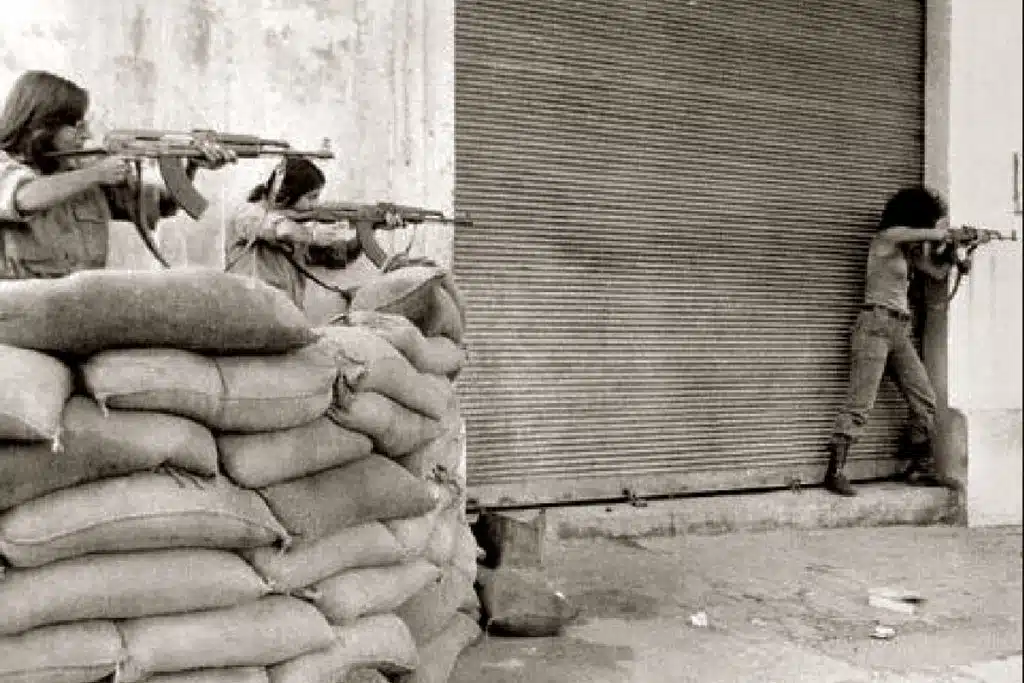
22) Lebanese Women in the 1975 War
The Lebanese Christian woman in the 1975 war appears here as the summit of a long path of Maronite heroism: from ancient martyrdom to modern resistance. In this chapter she is not drawn merely as a victim, but as a fighter, medic, organizer, and political actor who entered the war with consciousness and mission, not with passing reaction.
What gives this page its power above all is the diversity of roles: women fighters who bore arms and faced the front lines, young women who left aside the ordinary features of life under the pressure of danger, disciplined Kataeb women who underwent training, order, and field work, and women who provided medical, logistical, and moral support under fire. These are not scattered images, but the structure of a society that decided to fight with both its wings.
In this sense, the Lebanese Christian woman becomes a full partner in the defense of Christian Lebanon: carrying faith in her heart, dignity in her stance, and either weapon or service in her hand. Here the story reaches its climax: a woman who does not merely preserve memory, but creates it in the heart of battle.