
People sometimes treat Saint Maroun as a label placed on a tradition, an identity, a memory. Yet at the beginning he is first of all a man planted in the middle of a civilizational clash—fourth-century Syria, one of the most unsettled ages of the Near East. Everything is in motion at once: beliefs, authority, society, even the language people use to name the world. It was not a calm “religious era.” It was a time when pagan worship still held ground in many places, while Christianity was rising into public life; when doctrinal storms shook communities; when major cities and church seats competed; when imperial power pushed its weight into matters of faith; when local tensions grew under the pressure of empire; and when East and West began to drift in different directions. And yet—in the middle of that noise—the Christian and monastic life spread with surprising force, as if the turmoil itself was producing saints. What makes Saint Maroun’s age decisive is that it is not merely “spiritual.” It is historical in the strongest sense. The Near East lived under a succession of emperors, and with every reign the public climate shifted—sometimes toward tolerance, sometimes toward hostility, sometimes toward control. With Constantine, a threshold was crossed: the Church moved from secrecy to visibility. Freedom of worship was granted, churches were built, and the Council of Nicaea gave the faithful a firm confession of orthodox belief. Yet Christianity was not instantly enforced as the state’s sole religion. Coexistence remained, and with it the long cultural contest continued—open, persistent, and at times bitter. Then came a moment when paganism tried to breathe again with renewed ambition: a policy of restoring old cults and humiliating the Church, especially in Syria and the coastal regions. After that, imperial authority hardened against pagan sacrifice and temple life—bans, closures, conversions of sanctuaries into churches, official inspections. The age moved in waves: advance and retreat, pressure and reaction—until the quiet victory took root. Alongside the struggle with pagan religion, the fourth century carried another storm: a crisis inside Christianity itself. Arianism shook churches and split communities, turning theology into public conflict and ecclesial life into a battlefield of factions. As the controversy intensified, extremes appeared, alliances formed, councils gathered, and divisions deepened. The most painful element was the role of political power: imperial interference did not always calm the crisis—it often multiplied it. Support for one camp, pressure on another, expulsions, appointments, and the use of force turned spiritual questions into struggles for influence. In Antioch—the heart of the region—the fracture became especially visible: rival lines, contested authority, and a community torn within itself. In a time when many tried to win by argument, accusation, or decree, Saint Maroun chose a path that almost looks like provocation: silence that forms the soul, prayer that builds the inner man, and a life that persuades without shouting. The monks of the East were not merely “people who withdrew.” They represented a revolution within the human person. Monastic life was a method—discipline of the mind, purification of the heart, training of the will, and a relentless pursuit of truth and holiness. Monastic “schools” appeared and developed across regions: in Egypt, in Mesopotamia, and in northern Syria. Each carried a flavor, and Syria became known for a striking form of ascetic witness: a life exposed to the elements—hard, visible, uncompromising—not for display, but for testimony. Saint Maroun belongs to this current, yet he is not simply an isolated hermit. In the story, he is a man whose holiness presses outward. He seeks the places where paganism hides and survives—mountains, villages, countryside, distant regions—and he draws people not only through words, but through a Gospel made visible: Christ shown in a man’s manner of living. Here the theme reaches its sharpest point: paganism was not just an idea—it was land, temples, customs, and a sacred geography. Certain places carried symbolic power, and a mountain associated with the name “Nabu” stood as a concentrated image of that older religious world. The name itself echoes an ancient Assyrian religious memory—one of those long-lived cultic traces that spread across centuries and left marks in places and names. At the center stood a sanctuary seen as a fortress of pagan presence: not merely a building, but a spiritual headquarters. Saint Maroun’s approach is decisive: he does not fight from a distance. He goes where the pagan meaning is strongest, settles on the ground, and changes the place by changing the life around it. The story’s image is bold and simple: the temple becomes a church. Christianity does not merely knock down; it transforms. What once claimed hearts becomes a witness to the new light—without the language of conquest, but with the power of conversion. To understand Saint Maroun’s greatness, look where history speaks most clearly: in a region still largely shaped by pagan habits, in an unstable world, at a time when Christianity was only beginning to reshape the public soul of society. His victory is not the victory of force. It is the victory of coherence: prayer, ascetic discipline, purity of heart, charity, and a luminous presence that gradually turns consciences. Paganism truly retreats not when it is replaced by a slogan, but when it loses its grip on the inner man. And the Gospel advances the way it always does at its best: peacefully, steadily, and irreversibly—because lived truth has a strength noise cannot imitate. This is Part One of a series on Saint Maroun. The next articles will follow his disciples, the rise of the monasteries connected to his legacy, and then his monastic life and teachings—so we can see how the holiness of one man becomes a wider fruitfulness, and how Christian values, when truly embodied, endure and overcome.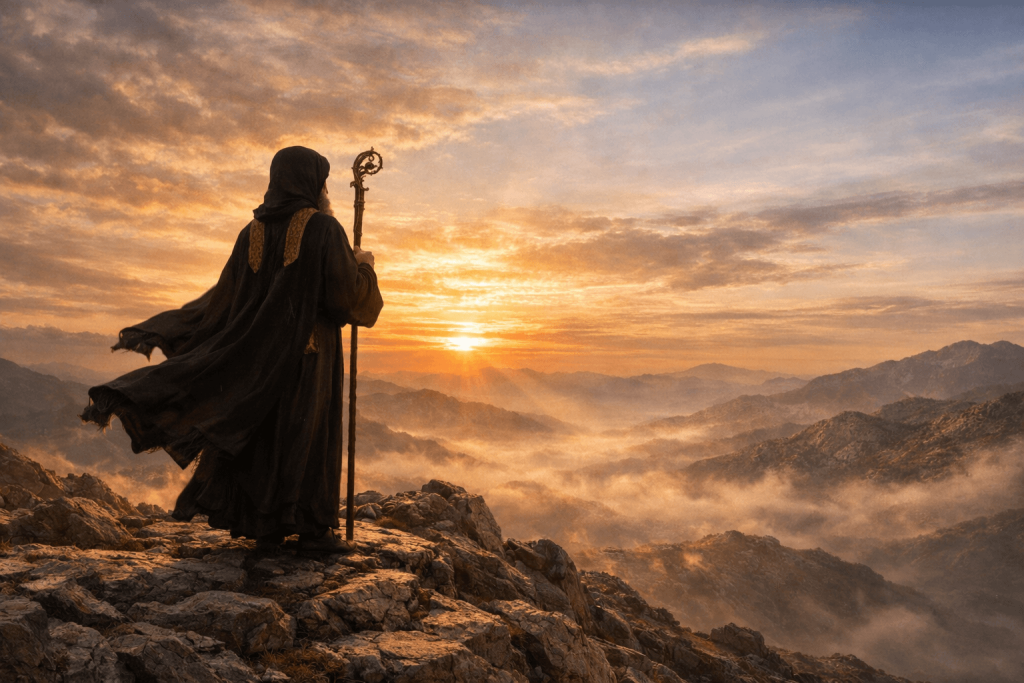
1) The Near East Where Saint Maroun Lived: A Century on the Edge
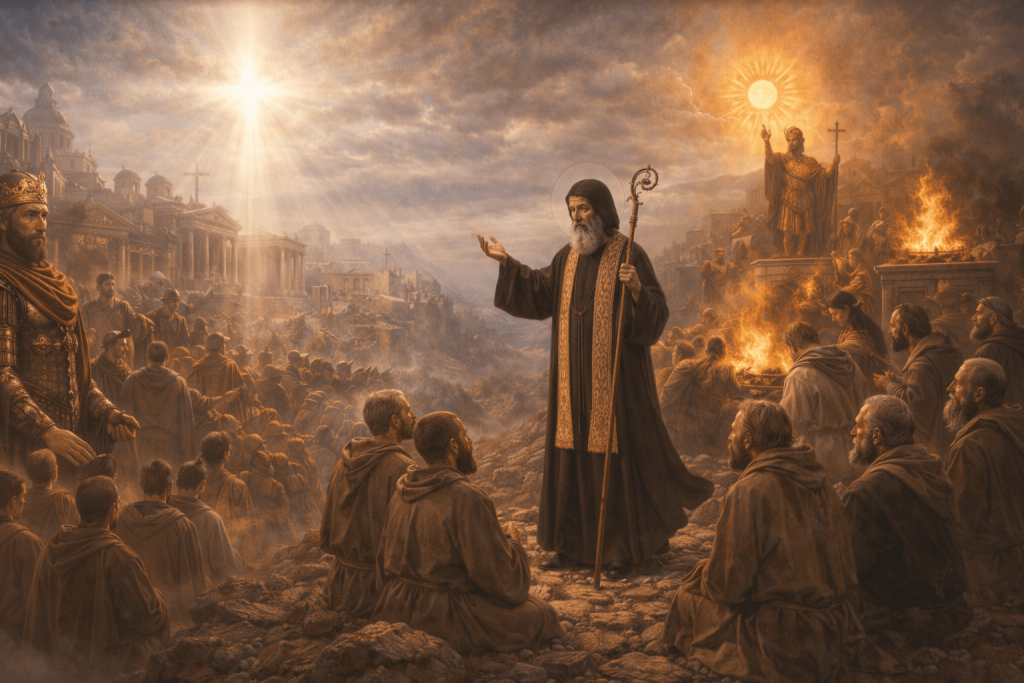
2) When the Empire Changed Course: Faith Emerges, and the Struggle Begins
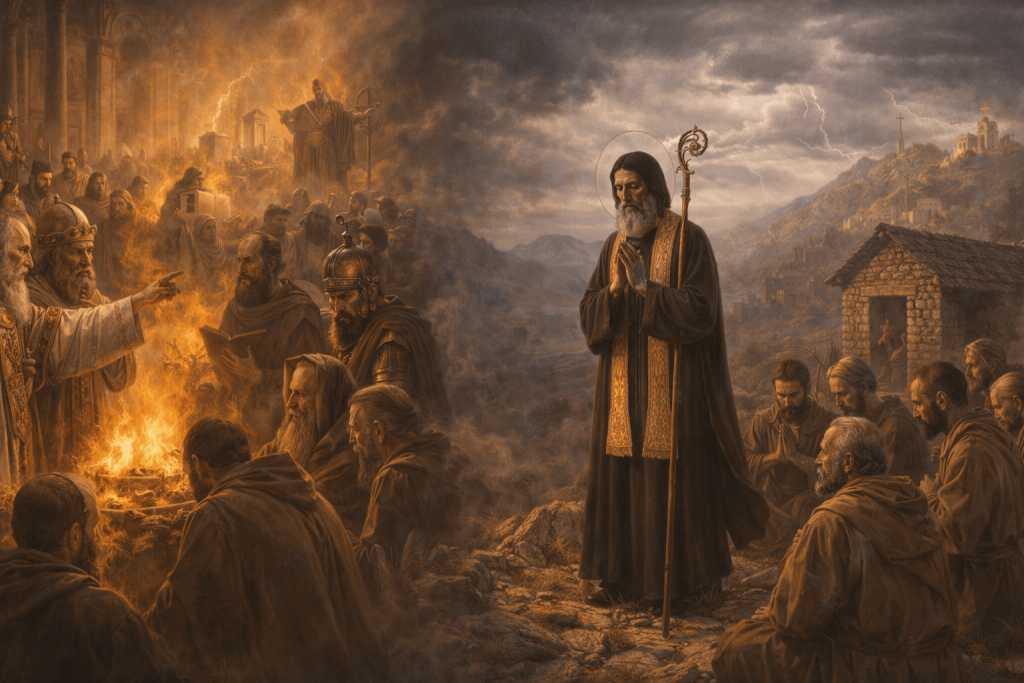
3) Not Only Paganism: The Arian Storm, Antioch Divided, and the Wounds of Power
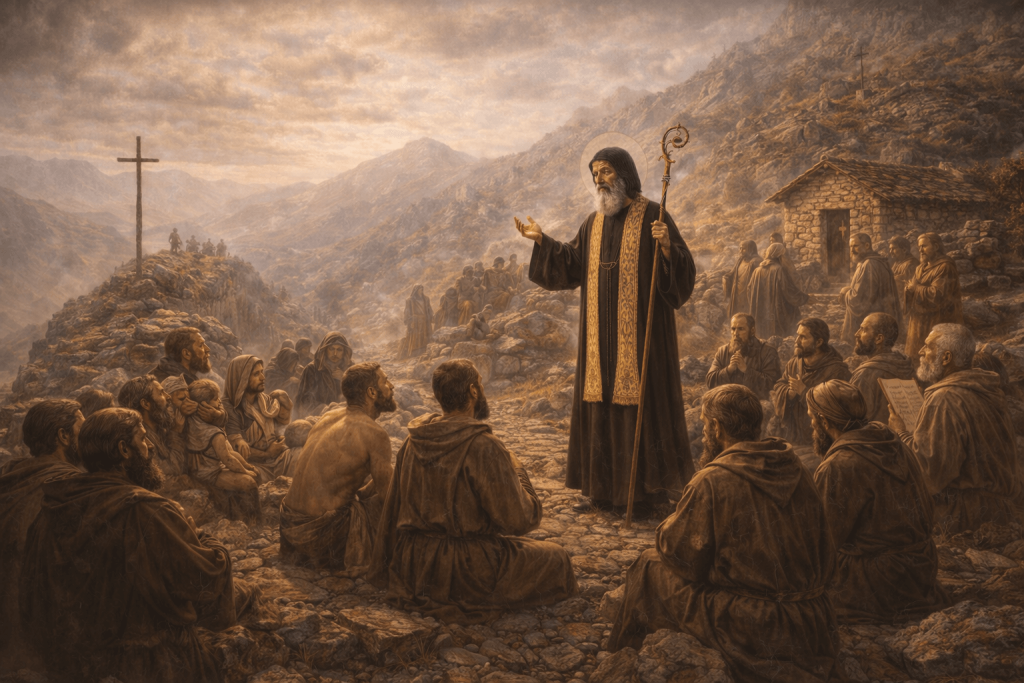
4) The Silent Revolution: Monasticism as a School of Christian Victory
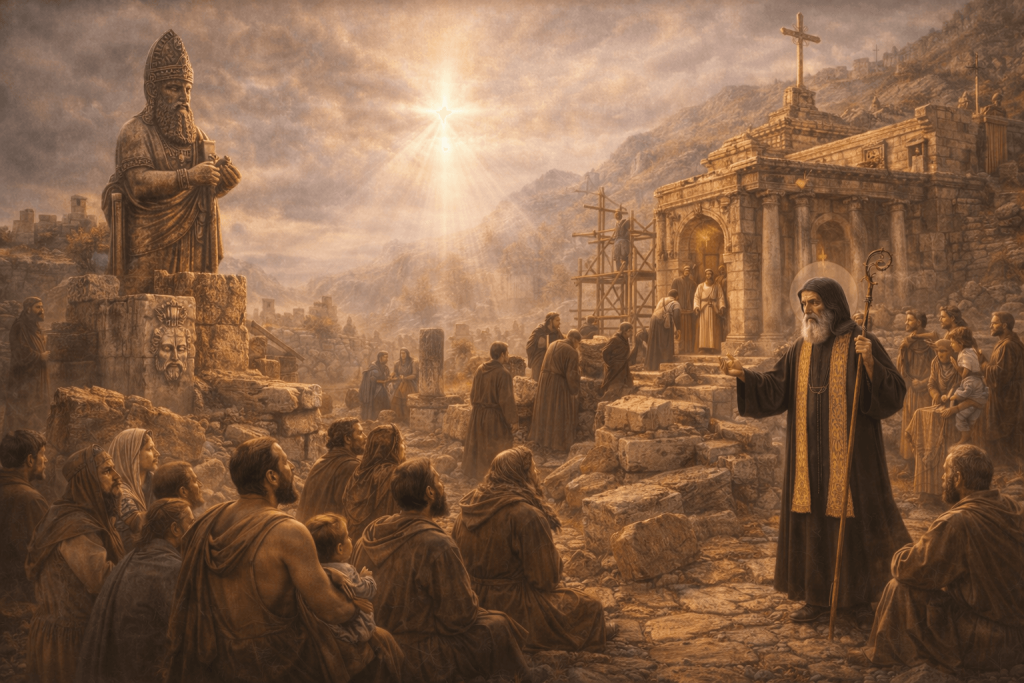
5) A Spiritual Masterstroke: Entering the Pagan Stronghold and Turning It into a Church
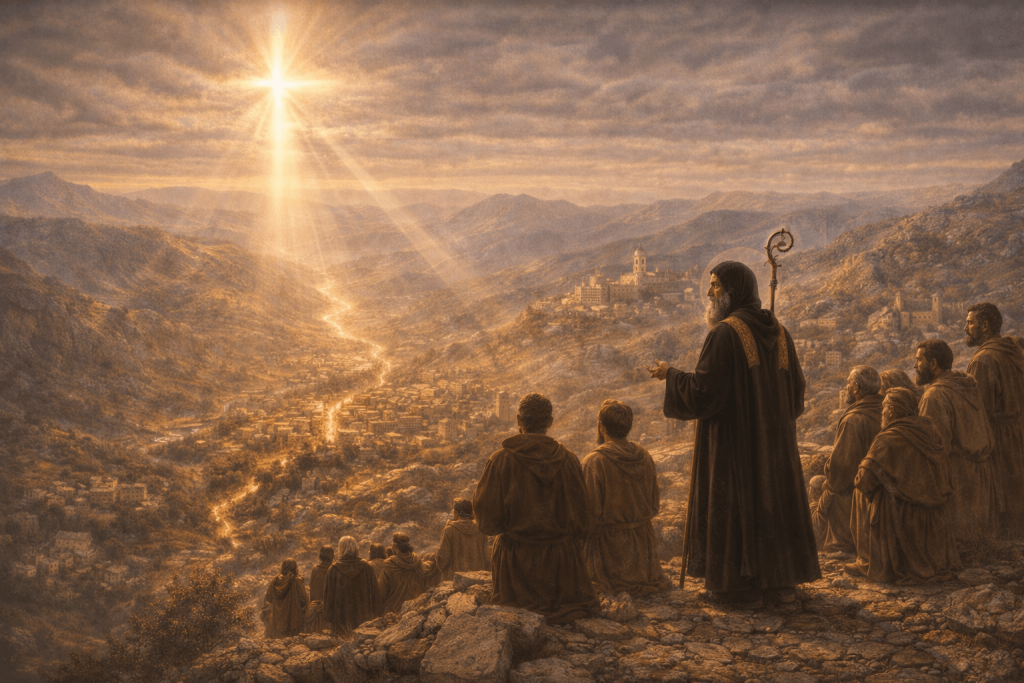
6) A Light That Spreads: Conversions, Influence, and the Road Opened Ahead